TRUCKING · CHECKLIST
The monthly bookkeeping checklist
for a trucking company.
A monthly trucking bookkeeping checklist: collect every settlement, fuel card and bank statement; book settlements gross; reconcile each bank, card and fuel card account to its statement; split truck loan payments; check escrow and factoring reserve balances; total fuel by state for IFTA; then review cost per mile. ZeraBooks bookkeeping services run this list every month.
Free call · from $150 a month (USD) · we work the checklist, you get the reports
STEP 1: COLLECT
Which documents do you need before closing a trucking month?
Nothing on the rest of the list works until every document for the month is in one place. Missing one settlement is the most common reason a trucking month won’t tie.
- Every settlement statement paid in the month, one per week for most leased-on drivers
- Bank statements for every business account, checking and savings
- Fuel card statements, with date, location and gallons for each fill
- Credit card statements for any card the business uses
- Factoring reports, if you factor invoices: advances, fees and reserve releases
- The truck and trailer loan statements, with principal and interest shown
- Receipts for anything paid in cash or outside the settlement: lumper fees, scales, parts
- ELD or trip sheet miles by state, for the IFTA total later
Tell us about your books. We’ll scope the work and quote it before anything starts.
STEP 2: THE MONTH
What are the monthly bookkeeping steps for a trucking company?
In this order. Each step uses the one before it, so doing the bank reconciliation before the settlements are booked just means doing it twice.
| Step | What “done” looks like |
|---|---|
| Book each settlement gross | Linehaul and fuel surcharge in revenue, each deduction in its own expense, escrow in an asset account |
| Match settlement nets to deposits | Every net payment on a settlement found on the bank statement, and every deposit traced to a settlement or invoice |
| Record factoring correctly | Full invoice amount as revenue, the factoring fee as an expense, the reserve as money still owed to you |
| Reconcile the bank accounts | Book balance equals the statement’s closing balance, to the cent |
| Reconcile cards and fuel cards | Each card’s new balance ties; fuel bought on a carrier card is not booked twice |
| Split truck and trailer loan payments | Interest to expense, principal against the loan; loan balance matches the lender’s statement |
| Check escrow and maintenance reserves | Escrow balance in the books matches what the carrier’s settlement says it holds |
| Total fuel by state | Gallons and dollars by state from fuel receipts and card statements, kept for the quarter’s IFTA return |
| Review the month | Profit and loss, cost per mile and revenue per mile compared with last month |
The general steps are in our month-end close checklist, and the bank side is explained in how to do a bank reconciliation. Booking a settlement line by line is worked through on bookkeeping for trucking.
STEP 3: QUARTER AND YEAR
What gets added to the checklist each quarter and each year?
Your accountant or permit service files these. The checklist’s job is to have the numbers ready before the deadline, not the week after.
| When | Item | What the books supply |
|---|---|---|
| Quarterly: Apr 30, Jul 31, Oct 31, Jan 31 | IFTA fuel tax return | Fuel bought by state for the quarter, next to ELD miles by state |
| Quarterly: Apr 15, Jun 15, Sep 15, Jan 15 | U.S. estimated income tax | Profit so far this year, so the payment is based on real numbers |
| Yearly, by Aug 31 for trucks in use in July | Form 2290 heavy vehicle use tax | Which trucks, their weight and the month each was first used |
| Yearly, at renewal | IRP apportioned plates | Miles by jurisdiction for the reporting year |
| Yearly, after December closes | Income tax return | A trial balance, the asset list for depreciation, the year-end loan balances and days away from home for per diem |
Canadian carriers add GST/HST returns on the schedule CRA assigned them, and file IFTA with their base province. ZeraBooks keeps the books and the fuel figures; it does not file IFTA, IRP, Form 2290 or tax returns.
WHAT GETS MISSED
Which items do trucking companies most often skip?
The escrow balance
Money the carrier holds is yours. If it was booked as an expense each week, the books understate what you own and overstate costs.
Fuel bought twice
A fuel advance on the settlement and the same fill on the fuel card statement. Book it once, from one document.
Factoring reserves
The few percent held back until the customer pays. Released reserves get booked as new revenue by mistake.
Loan principal as expense
The whole truck payment booked to expenses makes profit look smaller and leaves the loan balance wrong.
Personal spending on the business card
Owner draws belong in equity. Left in expenses, they inflate deductions in a way that does not hold up.
WITH ZERABOOKS
Can someone else work the trucking checklist for you?
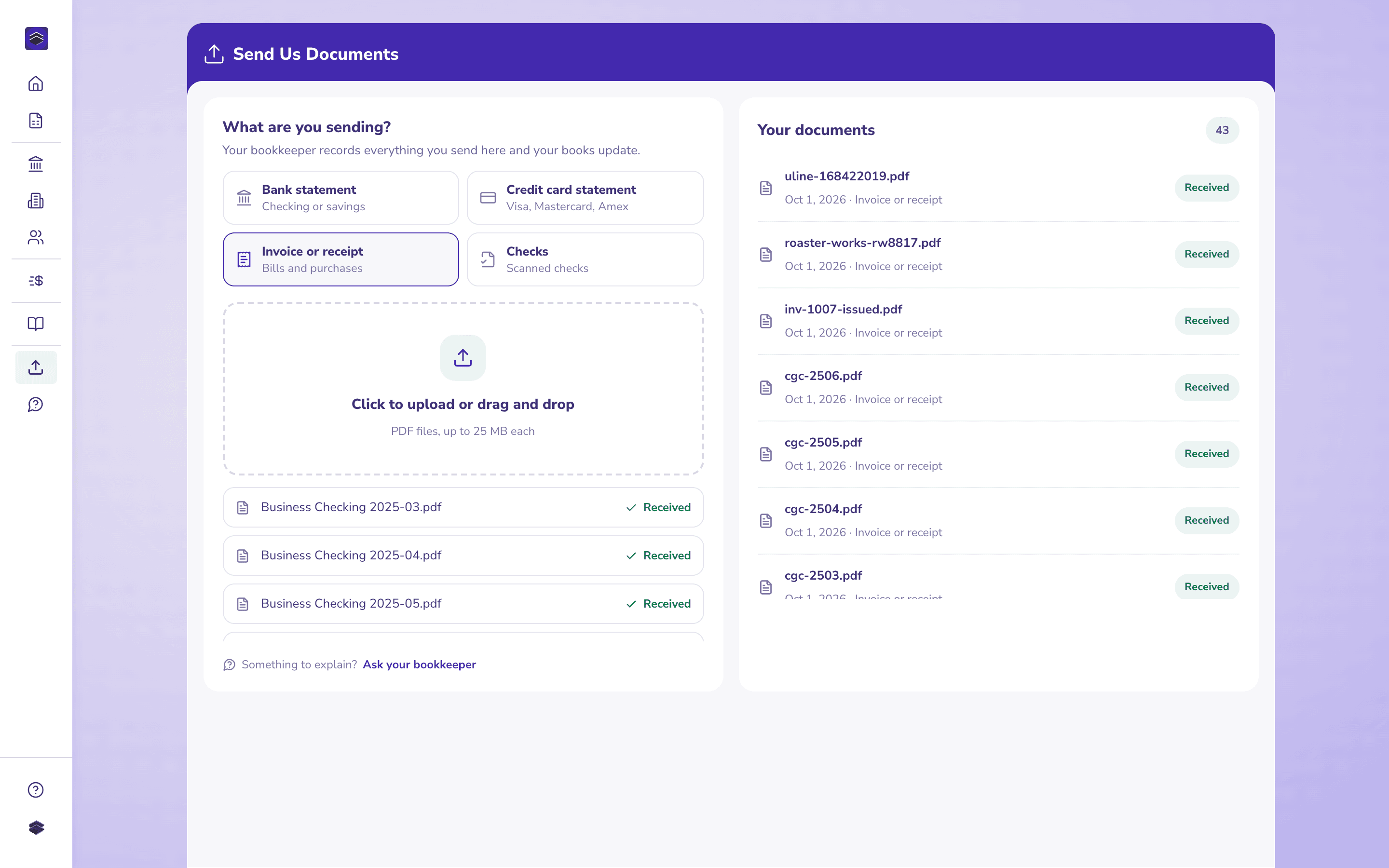
Yes. Our team keeps the books on our own AI-native ledger and works this list every month.
- 1
Upload the month
Settlements, bank, card and fuel card statements and loan statements go into your upload portal. There is no bank or fuel card feed.
- 2
We work the list
Settlements booked gross and matched to deposits, every account proven against its statement, loans split and escrow checked.
- 3
You get the month
Profit and loss, balance sheet and fuel by month in your read-only login, plus questions only where a document is missing.
- 4
Your quarter is ready
Fuel totals for IFTA and year-to-date profit for estimates, ready for your accountant. Drivers who want to run it themselves can follow our owner-operator bookkeeping routine.
How long does a trucking month-end take?
For one truck with one carrier, an hour or two once the documents are together. Waiting for fuel card and loan statements usually takes longer than the work. Each extra truck, card or factoring account adds time.
Do I need to reconcile the fuel card?
Yes. A fuel card is a credit account with its own statement and balance. Reconciling it is how you catch fills booked twice or missing, and it is where your IFTA fuel figures come from.
What if a settlement is missing?
Ask the carrier for it before closing the month. Booking only the deposit loses the gross revenue and every deduction for that week, and the escrow balance stops matching.
Does ZeraBooks file IFTA or Form 2290?
No. ZeraBooks keeps the books and gives you fuel spend by state and quarter from your fuel card statements. Your permit service or accountant files using those figures and your ELD miles.
What does it cost to have the checklist done for me?
ZeraBooks bookkeeping starts from $150 a month in U.S. dollars, with the price agreed after a free call. Months that were never done are quoted once as catch-up bookkeeping.
WE DO YOUR BOOKS
Hand over the checklist.
Keep the reports.
Every settlement, fuel card and loan statement worked through each month, from $150 (USD). Book the free call. The books live in ZeraBooks AI bookkeeping software, proven against each statement.
Last updated November 4, 2026 · Written by Damin Mutti, founder of ZeraBooks