What is a general ledger? One month, followed from entry to report.
A general ledger is the complete record of a business’s accounts: every transaction posted as equal debits and credits to accounts such as cash, receivables, revenue and expenses. Each account’s running balance feeds the trial balance, and the trial balance feeds the financial statements. General ledger software like ZeraBooks keeps it from your statements.
7-day free trial · card required, nothing charged for 7 days · then $79/month billed annually or $149 monthly
Correct one, and the rest follow.
DEFINITION
What is a general ledger?
The book, or system, that holds every account in a business’s chart of accounts and every transaction posted to them, each as balanced debits and credits. It is the single source the trial balance and financial statements are prepared from.
ONE MONTH, SIX ENTRIES
What does a general ledger entry look like?
Fernwood Studio is a fictional one-person design studio. Here is its first month, March 2026, as journal entries. Every entry has at least one debit and one credit, and they are always equal.
#
Transaction
Debit
Credit
Amount
1
Owner puts money into the business
Cash
Owner’s equity
10,000.00
2
Laptop bought on the business card
Equipment
Credit card payable
2,400.00
3
Invoice sent to a client
Accounts receivable
Design revenue
6,500.00
4
Client pays part of the invoice
Cash
Accounts receivable
4,000.00
5
March rent paid from the bank
Rent expense
Cash
1,800.00
6
Design software charged to the card
Software expense
Credit card payable
120.00
Debits increase assets and expenses; credits increase liabilities, equity and revenue. Entry 4 moves money from receivable to cash without changing revenue: the revenue was earned when the invoice went out.
Try it on your own documents. One-week free trial, both apps included.
Each entry posts to the accounts it names. The ledger keeps a running balance per account. Here are Fernwood’s eight accounts at March 31:
Account
Posted from entries
Debits
Credits
Balance
Cash
1, 4, 5
14,000.00
1,800.00
12,200.00 Dr
Accounts receivable
3, 4
6,500.00
4,000.00
2,500.00 Dr
Equipment
2
2,400.00
2,400.00 Dr
Credit card payable
2, 6
2,520.00
2,520.00 Cr
Owner’s equity
1
10,000.00
10,000.00 Cr
Design revenue
3
6,500.00
6,500.00 Cr
Rent expense
5
1,800.00
1,800.00 Dr
Software expense
6
120.00
120.00 Dr
In practice the ledger shows every line behind each balance, with its date and description, so any number on a report can be traced back to the entries that made it.
THE PROOF
What is the difference between a general ledger and a trial balance?
The ledger holds every transaction. The trial balance lists only each account’s ending balance, in a debit or credit column, to prove the two columns are equal. Fernwood’s trial balance at March 31:
Account
Debit
Credit
Cash
12,200.00
Accounts receivable
2,500.00
Equipment
2,400.00
Credit card payable
2,520.00
Owner’s equity
10,000.00
Design revenue
6,500.00
Rent expense
1,800.00
Software expense
120.00
Totals
19,020.00
19,020.00
Equal totals prove every entry balanced. They don’t prove every entry is right: rent booked to software expense would still balance. That is what reconciling each account to its statement is for; see how to do a bank reconciliation.
THE REPORT
How does the general ledger become a profit and loss?
The revenue and expense accounts make the profit and loss statement. The asset, liability and equity accounts make the balance sheet. Fernwood’s March profit and loss:
March 2026
Amount
Design revenue
6,500.00
Rent expense
(1,800.00)
Software expense
(120.00)
Net income
4,580.00
Net income is 4,580.00, but the business’s own cash only grew by 2,200.00: 12,200.00 at month end less the 10,000.00 the owner put in. The 2,380.00 gap is the 2,500.00 the client still owes, less the 120.00 software charge still sitting on the card. The laptop isn’t in the P&L at all; it is equipment on the balance sheet. That is why the balance sheet and cash flow sit beside the P&L.
NEARBY TERMS
General ledger vs journal vs chart of accounts
Chart of accounts
The list of accounts the ledger can post to, each with a type and usually a number. Start from our chart of accounts template.
Journal
The entries in date order, as in the first table. The ledger is the same entries sorted by account.
Subledger
Detail behind one ledger account, such as each customer’s invoices behind accounts receivable. Its total must equal the account in the general ledger.
Trial balance
Every account’s balance on one page, debits beside credits, as a check before the reports are prepared.
General ledger software
Software that keeps all of the above and builds the reports from it. Small businesses usually use accounting software for this rather than a spreadsheet.
WITH ZERABOOKS
A general ledger where AI makes the entries.
ZeraBooks is a double-entry general ledger with eight account types. You upload bank and card statements; the entries above are made for you.
POSTED FROM STATEMENTS
Statements become balanced entries.
Each statement line posts as a debit and a credit to your chart of accounts. The AI makes the judgment calls, such as which account a charge belongs to; the ledger does every calculation, and each AI action is logged with an undo. More in AI bookkeeping.
A statement categorized as it lands.
OR BY HAND
Journal entries when you need them.
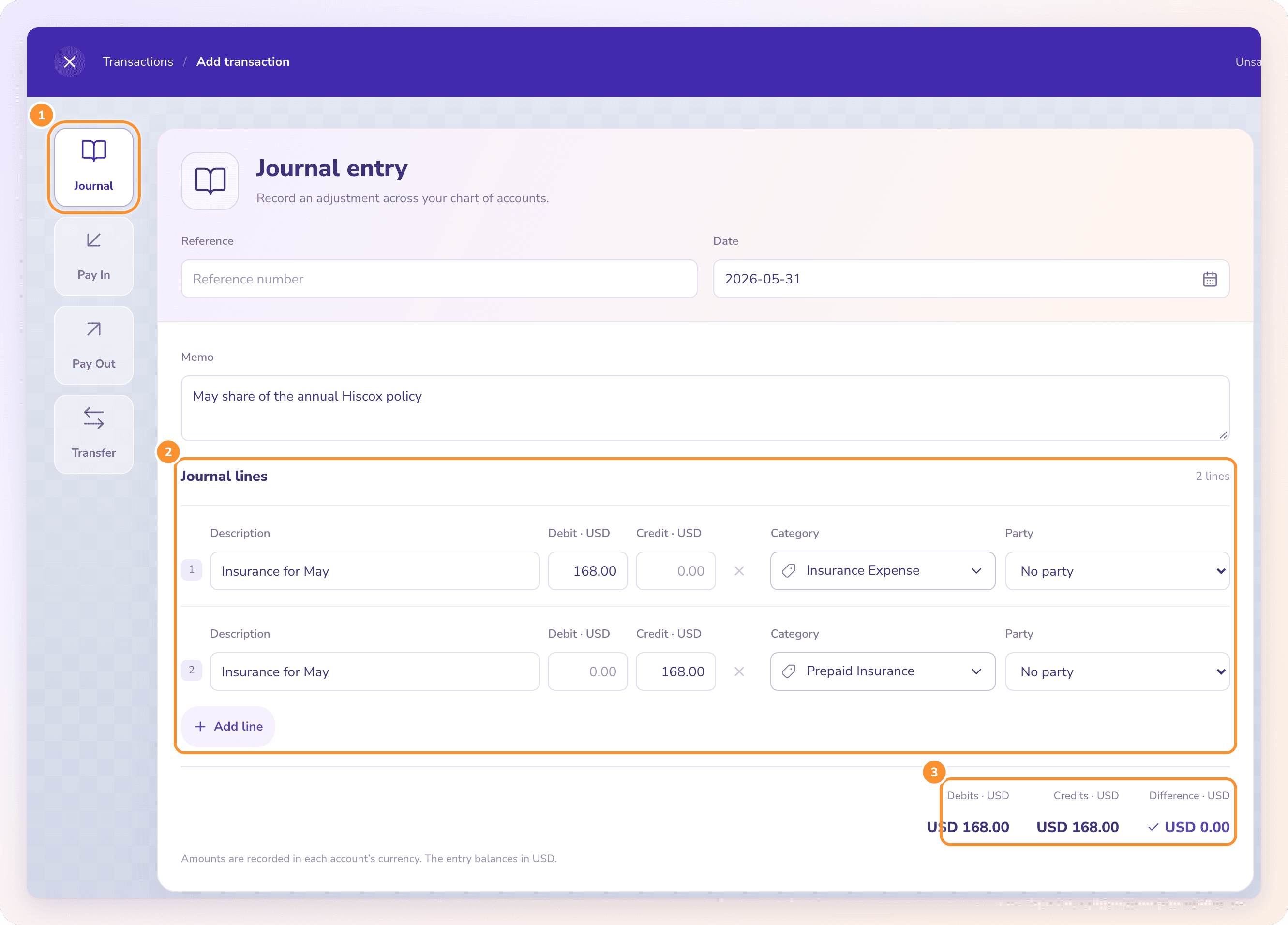
Equipment, owner contributions and corrections go in as journal entries; the difference must be zero before you can save.
The master record of a business’s money: one page per account (cash, what customers owe, sales, rent and so on), with every transaction listed on the pages it affects.
What are the five types of general ledger accounts?+
Assets, liabilities, equity, revenue and expenses. ZeraBooks splits revenue into two types and expenses into three, so the profit and loss can show gross profit and keep one-off items apart: eight types in all.
Is a general ledger the same as a bookkeeping spreadsheet?+
A spreadsheet can hold a ledger, but nothing forces each entry to balance or stops a formula from breaking. Accounting software enforces both and builds the reports from the same data.
Who keeps the general ledger in a small business?+
The owner, a bookkeeper, or both. If you’d rather not, our bookkeeping services team keeps the ledger for you on ZeraBooks.
How much is ZeraBooks general ledger software?+
$79 a month billed annually or $149 monthly, after a 7-day free trial, with the Converter included. See ZeraBooks pricing.